
Table of Contents
- Why Fall Hits Maryland Floors Harder Than Other Seasons
- Stopping Mud and Wet Leaves Before They Reach Your Floors
- The Moisture Problem Nobody Mentions Until It’s Too Late
- Fall Care by Floor Type: Hardwood, Tile and Stone, Carpet
- DIY Care vs Floor Cleaning Maryland Pros Provide Before Winter
- When Professional Floor Cleaning Makes Sense (and When It Doesn’t)
- A Real Look at Fall Floor Damage in a Maryland Home
- Is professional floor cleaning different from regular house cleaning?
- Does mud actually damage hardwood floors, or does it just look bad?
- How often should Maryland homeowners clean floors during fall?
- Why does hardwood cup or warp after a wet fall?
- What affects the cost of professional floor cleaning?
- What should I ask a floor cleaning company before hiring them?
- Getting Your Floors Ready for a Maryland Winter
Direct Answer: Floor cleaning Maryland homeowners rely on before winter combines entryway mud control, prompt moisture drying, and floor specific care for hardwood, tile, and carpet to prevent staining, swelling, and mold growth through the wet season.
Fall in Maryland looks great in photos and feels rough on floors. Between the Piedmont clay that turns to paste after a storm and the maple and oak leaves dropping across Baltimore County and Howard County yards, most homes see more tracked in dirt between October and December than during the rest of the year combined. Homeowners often ask us to explain the difference between “sealing,” “waxing,” and “refinishing” a hardwood floor, three terms that sound similar but do very different jobs, and that confusion usually shows up right when fall moisture starts testing an old or worn finish.
This guide walks through three things. First, how to stop mud and wet leaves at the door before they ever touch your flooring. Second, a moisture problem that quietly damages floors long before anyone notices a stain. Third, specific fall care for hardwood, tile and stone, and carpet, since each one fails in a different way when the weather turns wet.
Why Fall Hits Maryland Floors Harder Than Other Seasons
Maryland’s fall combines three stressors that most other regions face separately. Frequent rain saturates the clay-heavy soil common across the Baltimore and Washington DC corridor, so shoes carry in a wetter, heavier grit than summer dust. Falling leaves break down into a fine, oily film once they get wet, which is why floors can feel slick near entryways even after a quick sweep. Add shorter days and cooler indoor humidity, and floors take longer to air dry between cleanings than they did in July.
Floor cleaning Maryland households need during this stretch is less about scrubbing harder and more about timing. A wet floor that sits overnight causes more damage than the same amount of mud cleaned up within an hour. That single habit, wiping up moisture promptly instead of letting it dry into the finish, prevents most of the fall damage we see on service calls across Owings Mills, Ellicott City, and Towson.
Stopping Mud and Wet Leaves Before They Reach Your Floors
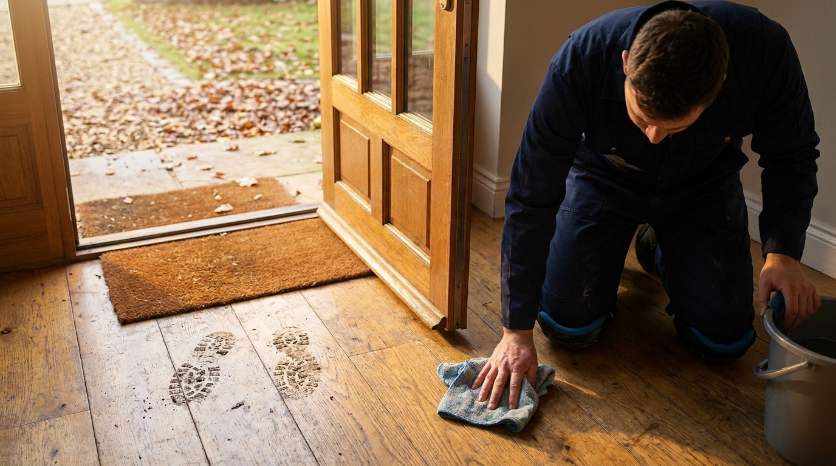
The most effective floor protection happens before anyone steps inside. A two mat system works better than a single mat at the door. An outdoor mat with a rough, textured surface, coir or rubber bristle, scrapes loose debris off the sole of a shoe. An indoor mat made of absorbent material then catches whatever moisture is left, so it never reaches your flooring.
A shoes off policy sounds simple, but it removes the single largest source of tracked in grit. Pair it with a small bench or shoe rack near the door and most families adopt the habit within a week or two. For homes with dogs, keep a towel by the door for paws. A quick wipe takes ten seconds and prevents muddy prints from working into grout lines or carpet fibers.
Runners in high traffic hallways buy you time between cleanings, not a replacement for them. Wash or shake them out weekly during peak leaf season. A runner that stays damp underneath does more harm than good, since it traps moisture directly against hardwood or tile instead of letting it evaporate.
The Moisture Problem Nobody Mentions Until It’s Too Late
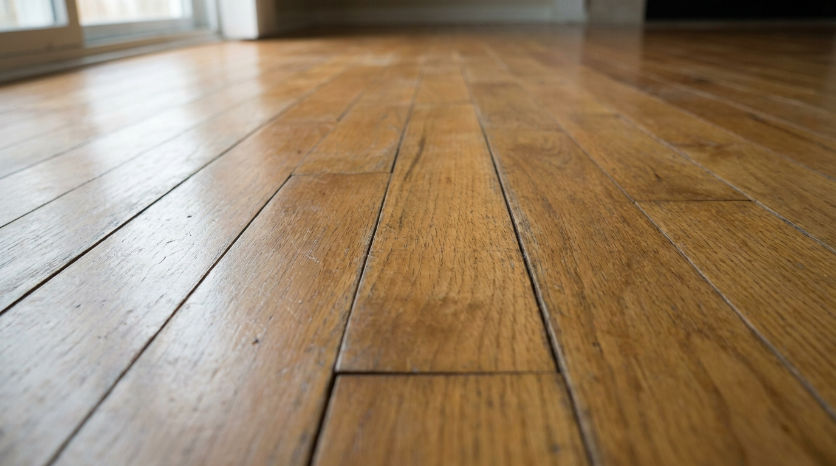
Most fall floor advice stops at sweeping and mopping. The part that gets skipped is what standing moisture does underneath the surface. Hardwood is hygroscopic, meaning it absorbs and releases water vapor from the air and from direct contact. When mud or wet leaves sit on a hardwood floor for hours instead of minutes, moisture works past the finish and into the wood fibers themselves. The boards expand unevenly, which is what causes cupping, that subtle ridge you can feel along the edges of individual planks, or in worse cases, visible warping.
Tile and stone handle surface moisture better, but grout does not. Porous grout lines soak up water like a sponge, and trapped moisture underneath tile near an entryway can eventually support mold growth in the subfloor, especially in finished basements common throughout Pikesville and Reisterstown. Carpet traps the most moisture of all three, since padding underneath can stay damp for days without proper airflow, creating musty odors and mildew risk long before any visible stain appears.
A few habits reduce this risk significantly:
- Dry wet entryway floors within the hour, not at the end of the day
- Run a dehumidifier or extra fan in basement entry areas during rainy stretches
- Lift and check carpet edges near exterior doors monthly for hidden dampness
- Avoid steam mopping hardwood, since heat and moisture together accelerate finish breakdown
Before hiring anyone for fall floor care, ask a practical question: how do you check for trapped moisture before you clean, not just how do you clean the visible surface? A crew that only addresses what’s visible is treating a symptom, not the actual risk.
Fall Care by Floor Type: Hardwood, Tile and Stone, Carpet
Each flooring material fails differently once fall weather sets in, so a single cleaning routine rarely covers all of them well. This is where daily habits alone start to fall short, and it’s why floor cleaning Maryland families schedule each fall focuses on material specific care instead of one generic approach.
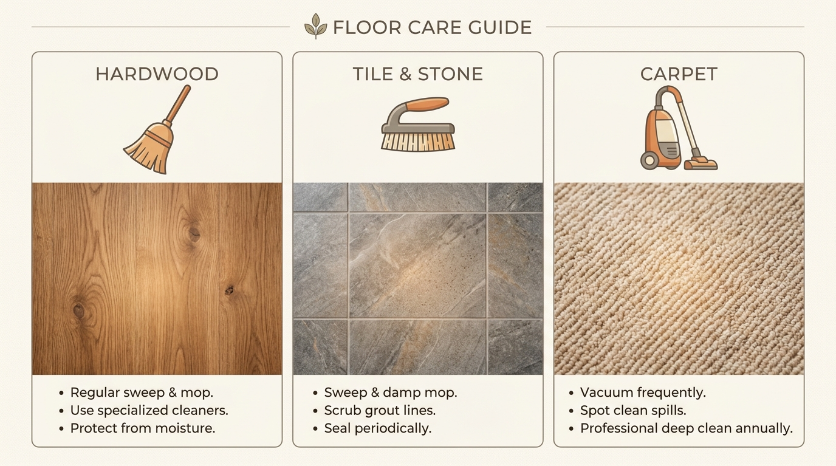
- Hardwood: dry mop or vacuum with a hard floor setting daily during leaf season, since grit acts like sandpaper under foot traffic. Wipe standing moisture immediately with a microfiber cloth. Common mistake: using a wet string mop, which pushes water into seams between boards instead of lifting it away.
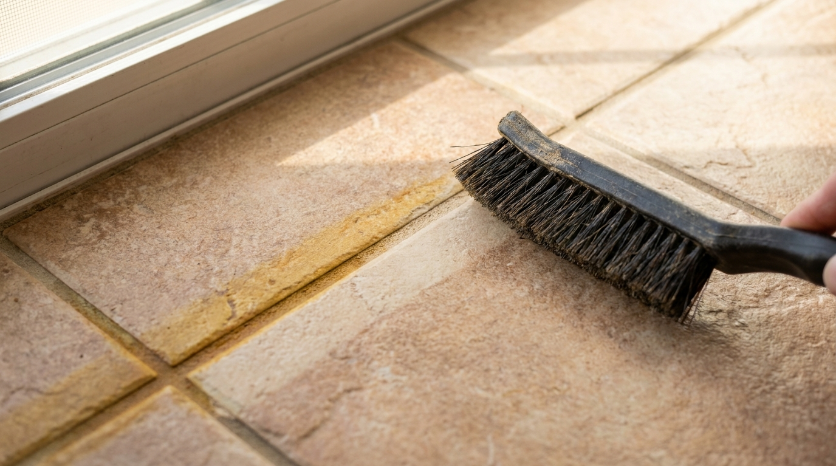
- Tile and stone: sweep before mopping so gritty debris doesn’t scratch the surface, and pay extra attention to grout lines near exterior doors where mud settles. Common mistake: using an acidic cleaner on natural stone, which etches the surface and dulls the finish over time.
- Carpet: vacuum high traffic entry paths at least twice a week through fall, and blot, never rub, fresh mud stains with a clean cloth. Common mistake: waiting until a stain sets before treating it, since dried mud binds to carpet fibers far more stubbornly than fresh mud.
DIY Care vs Floor Cleaning Maryland Pros Provide Before Winter
Daily habits handle the surface. A deeper seasonal clean handles what daily habits can’t reach, embedded grit in grout, oils worked into hardwood finish, and moisture sitting in carpet padding.
| Task | DIY Weekly Maintenance | Professional Floor Cleaning |
|---|---|---|
| Surface dirt and grit | Handles well with daily sweeping or vacuuming | Not necessary for this alone |
| Grout line buildup | Limited, hard to reach without specialized tools | Removes embedded soil most mops can’t touch |
| Hardwood finish restoration | Not possible with household products | Restores shine and reinforces protective layer |
| Deep carpet moisture and odor | Reduces surface odor temporarily | Extracts moisture from padding, not just fibers |
| Time investment | A few minutes daily, ongoing through the season | A single scheduled visit before winter |
Daily habits keep damage from starting. A seasonal deep clean addresses what’s already built up before winter humidity and heating season lock it into the finish.
When Professional Floor Cleaning Makes Sense (and When It Doesn’t)
Professional floor cleaning makes the most sense right before Maryland’s wet season peaks, typically once fall leaf drop is in full swing and before the first hard freeze. A busy entryway in a high traffic household in Ellicott City, or a finished basement with tile flooring in Pikesville that sees seasonal dampness, both benefit from a scheduled deep clean rather than waiting until visible staining shows up. The same applies to any home preparing for holiday guests, since entryways and kitchens see a spike in foot traffic right when outdoor conditions are at their messiest.
It makes less sense as a fall priority if your flooring is brand new, already professionally sealed within the past year, or in a low traffic area like a formal room that stays closed off most of the season. In those cases, consistent daily habits alone usually carry a home through winter without an extra service visit.
A Real Look at Fall Floor Damage in a Maryland Home
A household in the Owings Mills area contacted our crew after noticing their hardwood entryway felt slightly uneven underfoot. The homeowners had been drying up visible mud each evening, but moisture from wet leaves tracked in by two kids and a dog had been sitting under a hallway runner for weeks without them realizing it. Our team, booked through the floor cleaning service page, lifted the runner, found early stage cupping along several boards, and addressed it before it required sanding or refinishing. A simple change, washing the runner weekly and letting the floor fully air dry underneath, kept the problem from returning the following season. It’s a common pattern reflected in the feedback families leave on our Google Business Profile and in reviews on Yelp, where the recurring theme isn’t just a clean floor, it’s catching small problems before they turn into expensive ones.
Frequently Asked Questions
Is professional floor cleaning different from regular house cleaning?
Yes. Regular house cleaning covers everyday dust across the home. Floor cleaning Maryland companies provide as a dedicated service goes deeper into grout, hardwood finish, and carpet padding. Many homeowners schedule both together.
Does mud actually damage hardwood floors, or does it just look bad?
Mud does more than look bad. As it dries, it pulls moisture into the wood and grinds against the finish underfoot like fine sandpaper. Left long enough, it dulls the coating and contributes to moisture damage.
How often should Maryland homeowners clean floors during fall?
Daily sweeping or vacuuming in entryways is the baseline through leaf season. Mopping hardwood or tile once or twice a week keeps grit from building up. One deeper professional cleaning before winter catches what daily habits miss.
Why does hardwood cup or warp after a wet fall?
Cupping happens when one side of a board absorbs more moisture than the other, usually the underside exposed to standing water, causing uneven swelling. It’s slow, which is why it often goes unnoticed until the floor feels uneven underfoot.
What affects the cost of professional floor cleaning?
Cost typically depends on square footage, the flooring material, how much buildup has accumulated since the last service, and whether the job includes extras like grout sealing or finish restoration. Homes with several floor types usually cost more than one material alone.
What should I ask a floor cleaning company before hiring them?
Ask how they handle moisture sensitive flooring like hardwood, whether their process changes by floor type, and how they check for hidden damage first. A company that inspects before cleaning, rather than treating every surface the same, understands the material better.
Getting Your Floors Ready for a Maryland Winter
Protecting your floors through fall comes down to a few consistent habits: stopping mud and wet leaves at the door, drying up moisture before it has a chance to sit, and treating hardwood, tile, and carpet differently since each one responds to fall weather in its own way. Our guide on carpet cleaning explains how deep extraction protects carpet padding from the moisture risks covered above, and it pairs well with the seasonal habits in this guide.
If your entryway, hallway, or basement floors are already showing signs of fall wear, floor cleaning Maryland families trust for this kind of seasonal reset is one visit away. Reach out to our team to schedule a floor assessment before winter humidity and heating season make small problems harder to fix.