
- What Holiday Hosting Reveals About Your Upholstery
- The Odor and Stain Problem Nobody Mentions Until Guests Are Over
- Fabric vs Leather: A Decision Guide for Upholstery Cleaning Maryland Homes
- Quick Comparison: Fabric vs Leather
- When Professional Upholstery Cleaning Makes Sense (and When It Doesn’t)
- Why Maryland’s Fall and Winter Season Makes This Worse
- FAQ
- Steam Cleaning vs Dry Cleaning: What’s the Real Difference?
- Can You Clean Upholstery the Same Day as a Party?
- How Often Should You Clean Upholstery With Kids or Pets at Home?
- Why Does the Odor Come Back After Cleaning?
- What Affects the Cost of Upholstery Cleaning?
- What Should You Ask a Professional Before Hiring Them?
- Conclusion
Direct Answer: Upholstery cleaning Maryland homeowners rely on before hosting works best 1 to 2 weeks ahead of guests, since trapped odors and set-in stains only become obvious under close lighting and a full house, and the right method depends on fabric or leather.
Every host has heard the phrase “deep clean.” Furniture companies, carpet stores, and cleaning services all throw it around, but it rarely means the same thing twice. Some use it for a quick vacuum with an attachment. Others mean a full hot water extraction that pulls soil out of the padding underneath.
That confusion matters more in late fall. Your sofa goes from background furniture to the centerpiece of every gathering in your living room.
What Holiday Hosting Reveals About Your Upholstery
You live with your furniture every day, so gradual changes are easy to miss. A cushion slowly dulls in color. Odors fade into the background before you register them. Stains tuck themselves into a seam and go unnoticed for months. None of that registers when you are the only one sitting there.
Guests notice differently. They sit in a spot they have never used before. Overhead lighting replaces the lamp you usually dim in the evening. A house full of people also brings more body heat and foot traffic near the furniture. That combination pulls odors out of fabric fibers that were sitting dormant.
This is exactly why bookings for upholstery cleaning Maryland families rely on tend to spike before Thanksgiving. December gatherings bring the same rush. The furniture has not changed, but the audience and the lighting have.
The result is a short window where flaws become visible that were invisible for months. Catching that window early gives fabric time to dry fully. It also gives you a chance to address a problem you did not know was there, rather than discovering it the night of the party.
The Odor and Stain Problem Nobody Mentions Until Guests Are Over
Most upholstery cleaning Maryland guides skip this part: surface-level cleaning often leaves the real source of an odor untouched. Spraying a fabric refresher or vacuuming the cushions handles what sits on top of the fibers. It does very little for what has soaked into the foam padding and the frame underneath. That deeper layer is where pet accidents, spilled drinks, and years of body oil actually settle.
That padding acts like a sponge. Once odor-causing bacteria establish themselves inside it, spraying the surface becomes a temporary mask, not a fix. The smell fades for a day or two. Then it returns once humidity or body heat reactivates it. That is exactly what happens when a room fills with holiday guests.
A few habits help reduce this before it becomes a bigger issue:
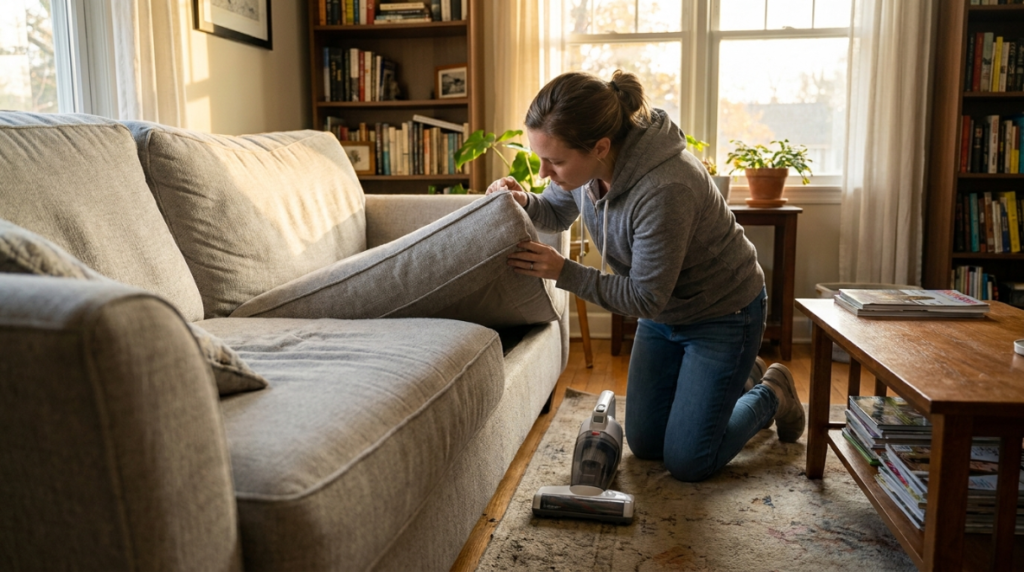
- Vacuum cushions and crevices weekly, not just before company arrives, so buildup never gets deep enough to reach the padding
- Blot spills the same day instead of rubbing, so liquid does not have time to travel into the foam
- Rotate and flip reversible cushions every few weeks so wear and odor exposure spread evenly
- Keep pets off upholstered furniture when possible, or use a washable throw laundered weekly
If a smell keeps returning no matter how often you clean the surface, ask one direct question before hiring anyone. Does the process reach the padding and frame, or only the fabric surface? The answer tells you whether you are paying for a real fix or a temporary cover-up.
Fabric vs Leather: A Decision Guide for Upholstery Cleaning Maryland Homes
Fabric and leather need almost opposite approaches, and using the wrong one can cause real damage. Knowing which category your furniture falls into changes how it should be cleaned.
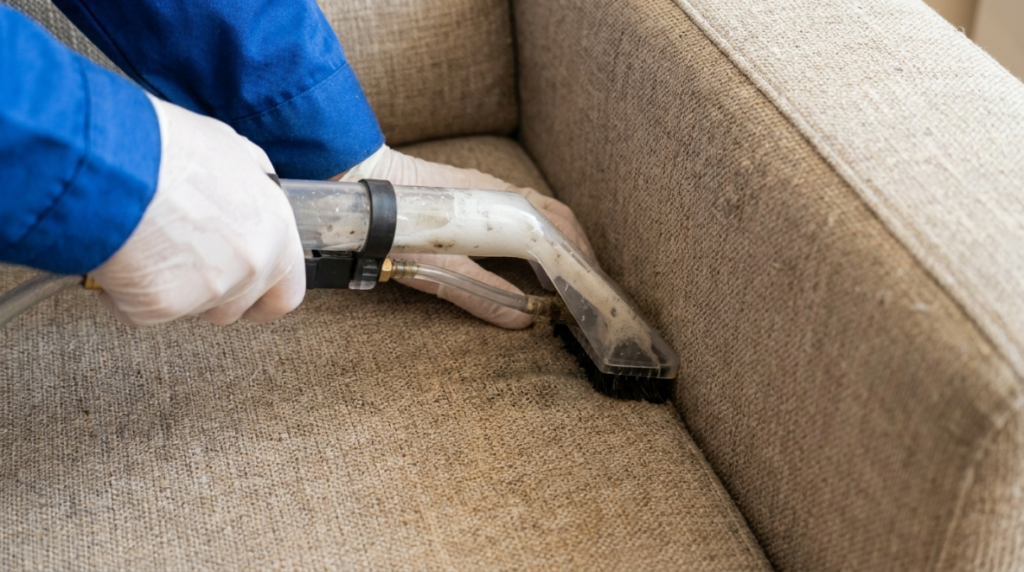
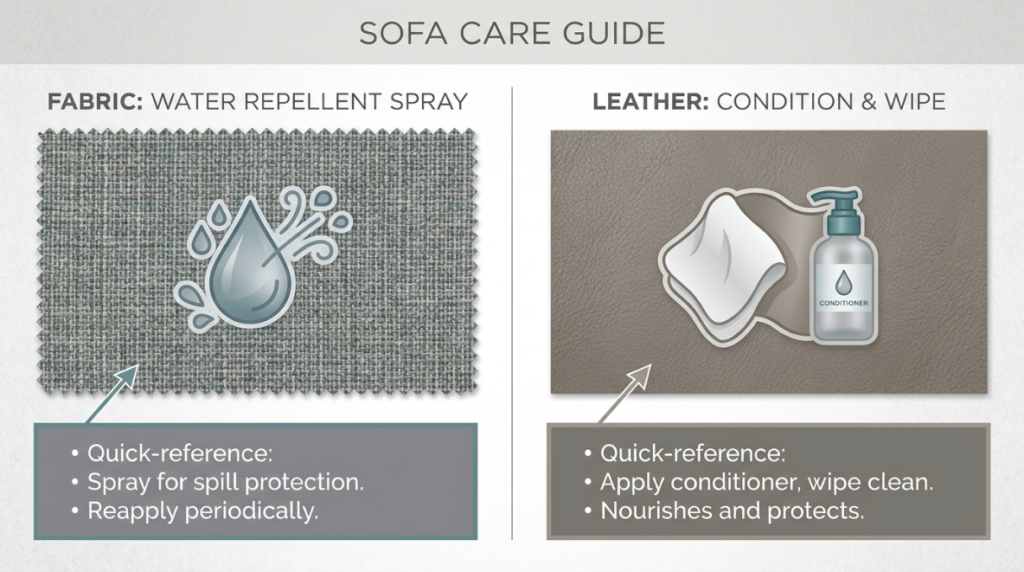
- Fabric upholstery: responds well to hot water extraction and enzyme-based pretreatments that break down oils and odor sources inside the weave. The common mistake is applying a store-bought spot cleaner without testing it on a hidden section first. Some fabrics react with discoloration or watermarking that will not come back out.
- Leather upholstery: needs a damp cloth and a pH-balanced leather cleaner, followed by conditioner every six to twelve months to prevent cracking. The common mistake is treating leather like fabric. Steam or hot water extraction strips its natural oils and leaves the surface stiff or prone to splitting.
- Blended or performance fabrics: increasingly common in newer sofas. These resist liquid on the surface but still need professional-grade cleaning periodically, since dirt and oils eventually work past the coating.
We handled a job last fall for a family in Ellicott City. Their leather sectional and fabric accent chair sat in the same room. They had been giving both pieces the exact same weekly wipe-down for years. The leather had started to dull and feel tacky in spots from product meant for fabric. Splitting the care routine between the two materials made a visible difference within a single visit.
Quick Comparison: Fabric vs Leather
| Feature | Fabric Upholstery | Leather Upholstery |
|---|---|---|
| Best cleaning method | Hot water extraction with enzyme pretreatment | pH-balanced cleaner with damp cloth |
| Recommended cleaning frequency | Every 6 to 12 months, more often with pets or kids | Conditioning every 6 to 12 months |
| Most common mistake | Untested spot cleaners causing discoloration | Steam cleaning, which dries out and cracks the surface |
| Typical lifespan with proper care | 7 to 12 years | 15 to 20 years |
When Professional Upholstery Cleaning Makes Sense (and When It Doesn’t)
Professional cleaning earns its keep before a major gathering, or after a pet accident that has soaked past the surface. The same is true for a piece you have not had cleaned in over a year. It also makes sense for anyone managing allergies, since deep cleaning removes dust mites and dander a vacuum alone cannot reach.
It is not always the right call. Visible tears, exposed foam, or structural sagging will not be solved by cleaning. Deep mold growth from a past water issue also falls outside what cleaning can resolve. That furniture usually needs replacement instead. Recognizing the difference early saves you from paying for a service that was never going to fix the real problem.
Why Maryland’s Fall and Winter Season Makes This Worse
Homes across the Baltimore to DC corridor close up tight once temperatures drop. Windows stay shut, and heating systems run for months at a stretch. The fresh air exchange that naturally dilutes odors during summer disappears. A living room in Towson or Catonsville that felt fine in September can start to smell different by late November, simply because the air stops moving through it.
That closed-up environment is also why stains set harder during this stretch. Indoor heat dries spills faster, which sounds helpful but actually locks residue into the fibers first. A simple wipe will not lift it back out. Scheduling upholstery cleaning before your heating season ramps up gives fabric a chance to dry properly, rather than fighting a house already sealed for winter.
Our crews typically see a jump in requests through October and November for exactly this reason. Families want the work finished with enough lead time for the furniture to dry fully. That way, it is odor-free before the first guest walks through the door.
Frequently Asked Questions
Steam Cleaning vs Dry Cleaning: What’s the Real Difference?
Steam cleaning, more accurately called hot water extraction, injects heated water and cleaning solution into the fabric. It then extracts the solution along with loosened dirt. Dry cleaning uses a low-moisture solvent or foam that lifts soil without saturating the material. This suits delicate or water-sensitive fabrics. Most everyday fabric sofas do well with hot water extraction, while silks, velvets, and vintage pieces call for the drier method. A technician should identify your fabric’s cleaning code before choosing either approach.
Can You Clean Upholstery the Same Day as a Party?
It is possible but not ideal. Most fabric needs 4 to 8 hours to dry fully depending on humidity and airflow. Cleaning the same day risks guests sitting on damp cushions, or fabric that has not finished off-gassing cleaning solution smell. Booking your upholstery cleaning Maryland appointment 2 to 3 days ahead gives the furniture time to dry and settle before anyone sits down.
How Often Should You Clean Upholstery With Kids or Pets at Home?
Households with kids or pets generally need professional cleaning every 6 months, compared to 12 months for a low-traffic household. Daily wear from spills, fur, and accidents builds up inside the padding much faster than normal use. Weekly vacuuming between professional visits helps stretch that interval. A musty smell returning within a few weeks of cleaning is a sign the interval needs to shrink.
Why Does the Odor Come Back After Cleaning?
Odor returns when the source sits below the surface, inside foam padding or the wood frame, rather than in the visible fabric alone. Surface sprays and light vacuuming address only what you can see and smell in the moment. A proper deep clean uses extraction equipment that reaches into the cushion, not just across the top layer. If the smell resurfaces within days, the original cleaning likely never touched that deeper source.
What Affects the Cost of Upholstery Cleaning?
Cost depends mainly on the number and size of pieces, plus the fabric type. A heavily soiled or odor-affected piece also needs more pretreatment. Leather conditioning is typically priced separately from fabric extraction, since it uses different products and more hands-on time. Add-ons like pet odor treatment or stain protection also factor in. Sending a provider a few photos ahead of time usually gets you the most accurate picture before booking.
What Should You Ask a Professional Before Hiring Them?
Start by asking whether their process reaches the padding and frame, or only the fabric surface. Find out whether they test products on a hidden area before treating the full piece, and how they handle leather differently from fabric. A company that treats both the same way is a warning sign. Ask about drying time so you can plan around a gathering, and what happens if a stain does not fully lift. A company confident in its process should have a clear answer.
Getting Your Furniture Ready Before the First Guest Arrives
Upholstery cleaning Maryland homeowners schedule ahead of the holidays is less about a spotless-looking sofa. It is more about catching problems that only show up once your house fills with people. Fabric and leather need different care. Closed-up winter homes trap odors faster than you would expect, and the fixes that actually work reach past the surface into the padding underneath.
We’ve handled upholstery cleaning across Owings Mills, Towson, Catonsville, Columbia, and the surrounding communities for years. The pattern is consistent every fall: families who book a week or two ahead avoid the last-minute scramble entirely. Reviews from our Google and Yelp customers consistently mention showing up on time and leaving furniture noticeably fresher. That is the standard we hold every crew to on every visit.
If your sofa, sectional, or dining chairs need attention before your next gathering, reach out through our contact page to get on the schedule. You can also call us directly at (240) 498-8827. Our upholstery cleaning services page breaks down exactly what a visit includes for both fabric and leather pieces. You can also see recent feedback from other Maryland homeowners on our Yelp profile, or check current availability through our Google Business Profile.